How to Join Merchant Navy After Class 12 – Step-by-Step Guide
Learn how to join the Merchant Navy after Class 12 with eligibility, courses, exams, training, and career path explained by Marine Edge for aspiring seafarers.
How to Join the Merchant Navy After Class 12
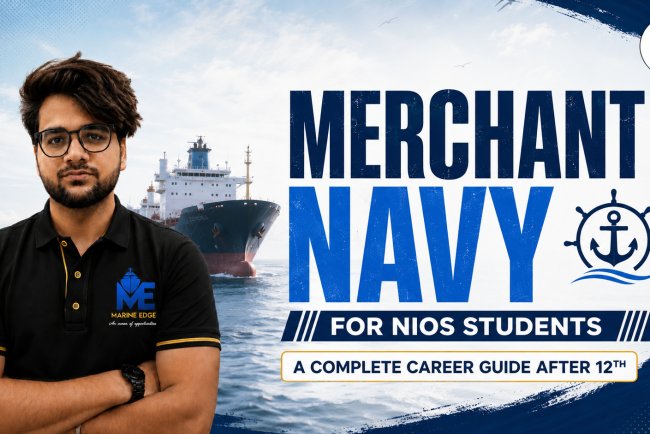
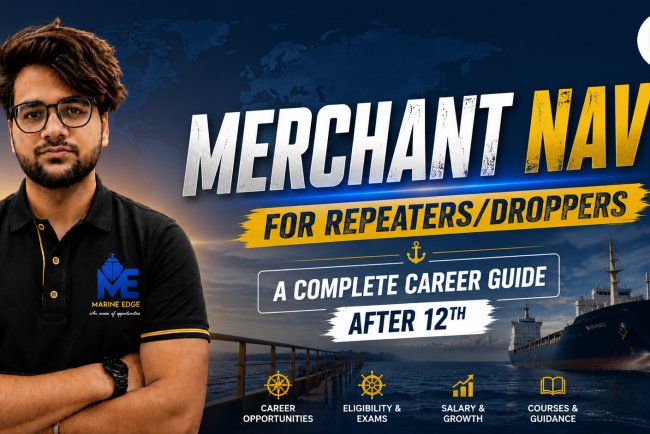
Joining the Merchant Navy after Class 12 opens the door to a global career at sea. The most common route is through pre-sea training courses like DNS (Diploma in Nautical Science) or B.Sc. in Nautical Science, followed by sea service as a cadet and professional certification. Eligibility generally requires Physics, Chemistry & Mathematics (PCM) in Class 12, medical fitness, and entrance exams like IMU-CET. This guide from Marine Edge explains each step clearly — from eligibility and entrance exams to training, sponsorship, and onboard career progression.
What is the Merchant Navy
The merchant navy is a vital sector of global trade, offering a rewarding career for individuals interested in the maritime industry. It involves working on cargo ships, tankers, passenger vessels, and other merchant vessels that transport goods and people across international waters. If you're considering a career in the merchant navy, here's a step-by-step guide on how to get started.
1. Understand the Career Path
Before diving into the specifics, it's crucial to understand the nature of a career in the merchant navy. A life at sea involves long voyages, extended periods away from home, and a physically demanding lifestyle. However, the profession offers attractive salaries, opportunities for travel, and a unique experience working on international waters.
There are two main career paths within the merchant navy:
-
Deck Department: Responsible for navigation, cargo handling, and ship operations.
-
Engine Department: Focuses on engine maintenance, machinery operations, and technical management.
Additionally, there is the Catering Department, which is responsible for food services on board.
2. Educational Qualifications
To join the merchant navy, you'll need to fulfill certain academic requirements depending on the role you wish to pursue:
-
Deck Officer: You should have completed 10+2 with Physics, Chemistry, and Mathematics (PCM) with a minimum of 60% marks.
-
Marine Engineer: Similarly, 10+2 with PCM is required, with a focus on pursuing a degree in marine engineering.


3. Clear IMU-CET (Indian Maritime University - Common Entrance Test)
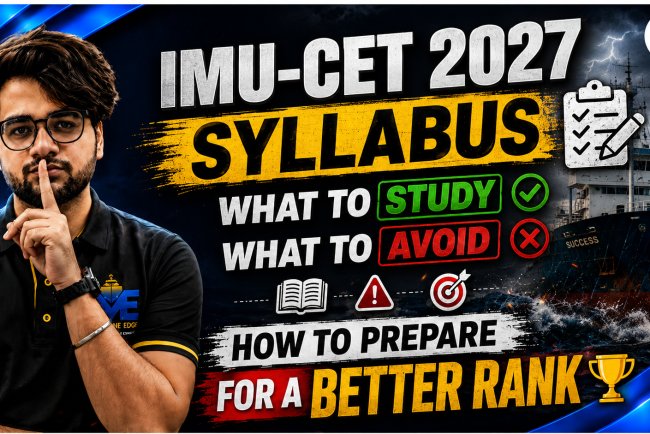
Clearing the IMU-CET is mandatory for aspiring officers and engineers. This entrance exam is the gateway to various maritime courses offered by institutes affiliated with the Indian Maritime University (IMU). The exam tests your knowledge in subjects like Physics, Chemistry, Mathematics, English, and General Aptitude.
After clearing IMU-CET, you'll be eligible for courses such as:
-
Diploma in Nautical Science (DNS) leading to B.Sc. Nautical Science
-
B.Sc. Nautical Science
-
B.E./B.Tech Marine Engineering
The choice of course will determine your career path, whether you want to be a deck officer or an engineer.
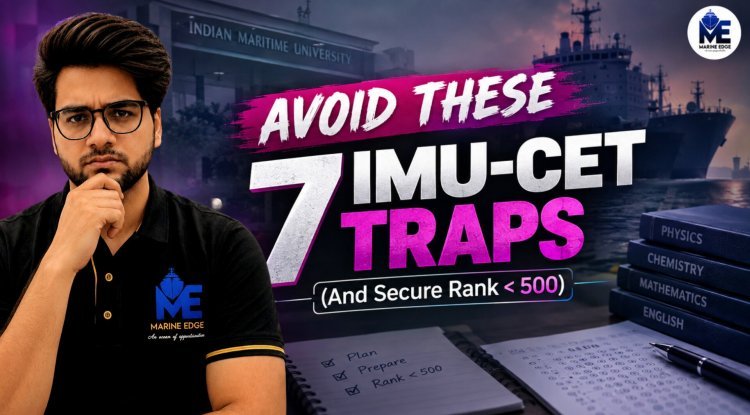
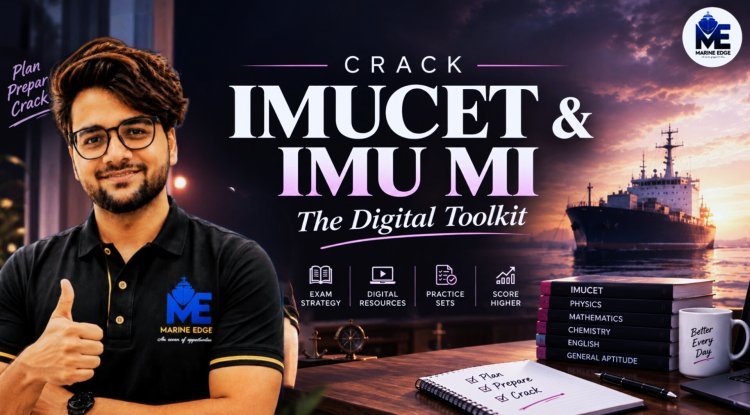
Prepare for IMU-CET for Merchant Navy
4. Get sponsorship from a company
Sponsorship in the Merchant Navy means a Job Guarantee.
This includes a written exam followed by a panel interview by the company,
After this, you get the sponsorship letter/ job letter from the company which ensures your permanent job with that company.
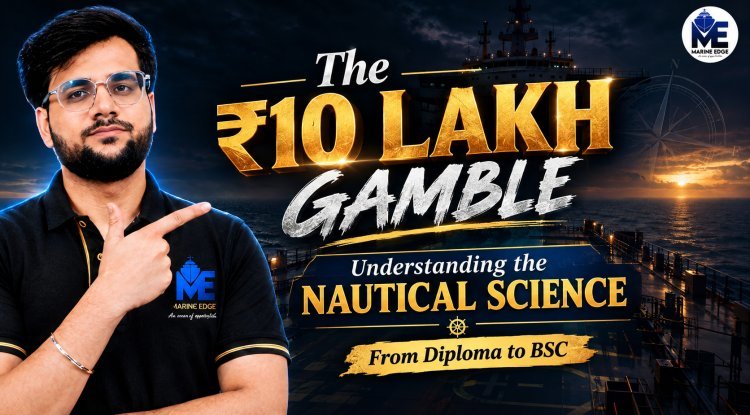
Merchant Navy sponsorship process explained
5. Join a Maritime Training Institute
Once you've cleared the IMU-CET, the next step is to enroll in a DG (Directorate General of Shipping) approved maritime training institute. There are numerous institutes across India offering courses that align with your chosen career path in the merchant navy.
Some popular maritime academies include:
-
T.S. Chanakya
-
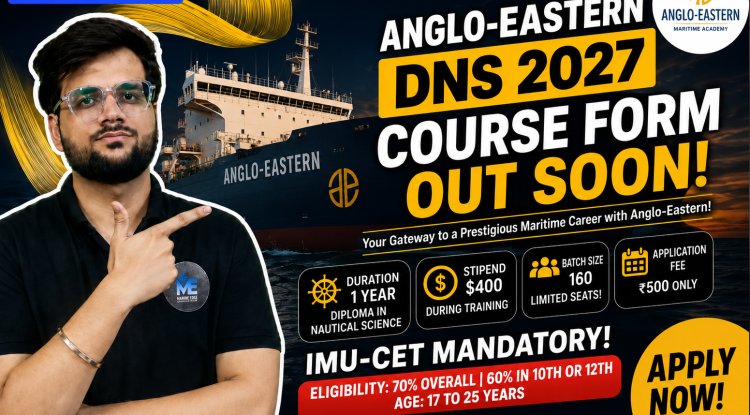
Anglo-Eastern Maritime Academy
-
AMET
-
Tolani Maritime Institute
-
Great Eastern Institute of Maritime Studies
-
Samundra Institute of Maritime Studies
Ensure the course is approved by the DG Shipping and IMU.
5. Complete Pre-Sea Training
After securing admission to a maritime institute, you'll undergo pre-sea training. This training is mandatory and is designed to prepare you for life at sea, covering both theoretical knowledge and practical skills.
DNS is 1 year
B.Sc. Nautical Science is 3 years
Marine Engineering, it is typically 4 years.
6. Onboard Training (Sea Time)
Once you've completed your pre-sea training, the next step is onboard training or sea time. This is where you'll gain hands-on experience working on a ship. Depending on your course, you'll be placed as a cadet, trainee engineer, or GP Rating on a merchant vessel.
DURING ON BOARD TRAINING YOU ARE PAID STIPEND OF 300$-600$
Sea time is a critical part of your training as it gives you real-world exposure to ship operations, navigation, machinery maintenance, and safety protocols. Typically, cadets are required to complete 12-18 months of sea service.
7. Obtain Certificates of Competency (CoC)
After completing the required sea time, you'll need to obtain a Certificate of Competency (CoC) to work as an officer on merchant ships. For example:
-
Deck Officers will need to clear the Second Mate’s Exam.
-
Marine Engineers will need to pass the Class IV Exam.
These exams are conducted by the Directorate General of Shipping and assess your technical knowledge and skills.
8. Start Your Career
Once you've obtained your CoC, you're ready to start your career in the merchant navy. You'll typically begin as a junior officer or engineer, working your way up to higher ranks such as Captain or Chief Engineer over time.
Many companies also offer sponsorships to cadets during their training, which can secure employment upon graduation. Some prominent shipping companies include:
-
Anglo-Eastern
-
Synergy
-
Fleet management
-
Maersk Line
-
Shipping Corporation of India (SCI)
-
Great Eastern Shipping

Courses after Class 12th
-
Diploma in Nautical Science (DNS) (1 year): This course leads to a B.Sc. Nautical Science degree after 18 months of sea service. Shorter duration and provides a quicker entry into the industry as a Deck Officer.
-
B.Sc. Nautical Science (3 years): Prepares you to become a Deck Officer. After graduation, you start as a Deck Cadet and progress to Captain.
-
B.E./B.Tech in Marine Engineering (4 years): Trains you to become a Marine Engineer. After completion, you join as an Engine Cadet or Junior Engineer and rise to the position of Chief Engineer.
How to Apply
- For IMU-CET: Register on the official IMU website and prepare for the entrance exam. After clearing the exam, you can choose from affiliated institutes for various courses.
- For Sponsorship Exams: Shipping companies such as Anglo-Eastern, Great Eastern, and others conduct their exams. Apply to these companies, clear their exams and interviews, and secure sponsorship.
- Private Institutes: Several private maritime academies offer Merchant Navy courses. Ensure the institute is approved by the Directorate General of Shipping (DGS).
Career Path and Progression
-
For Deck Officers: Start as a Deck Cadet, then rise to 3rd Officer, 2nd Officer, Chief Officer, and finally Captain.
-
For Marine Engineers: Start as a Junior Engineer, then progress to 3rd Engineer, 2nd Engineer, and ultimately Chief Engineer.
BENEFITS OF JOINING AFTER CLASS 12TH
1. Early Start to a High-Paying Career
-
Joining the Merchant Navy right after class 12th allows you to kickstart your career early. While many other professions require a bachelor’s degree and further qualifications, the Merchant Navy offers high-paying entry-level positions with just a diploma or degree, allowing you to begin earning at a young age.
2. Lucrative Salary
-
Even at the entry-level, cadets and junior engineers in the Merchant Navy earn attractive salaries. As you progress through the ranks, the pay scales increase significantly, often with tax-free benefits for Non-Resident Indians (NRIs).
3. Adventure and Travel Opportunities
-
If you enjoy traveling and exploring different parts of the world, the Merchant Navy is one of the few professions that offers you the opportunity to visit various countries while working. This adds an adventurous aspect to your career, allowing you to see new places and experience diverse cultures.
4. Long Periods of Vacation
-
The Merchant Navy offers a good work-life balance with extended periods of vacation after completing your sea tenure. Typically, after serving 3-6 months at sea, you are entitled to 2-3 months of leave, providing ample time to rest or spend time with family.
5. Rapid Career Growth
-
In the Merchant Navy, career growth is generally faster compared to other fields. With dedication, experience, and the right certifications, you can move up the ranks relatively quickly. For instance, you can progress from a cadet to an officer or engineer to a senior role like Captain or Chief Engineer within a decade
Frequently Asked Question (FAQs)
What are the eligibility criteria to join the Merchant Navy after Class 12?
To join the Merchant Navy after Class 12, you must have passed with Physics, Chemistry, and Mathematics (PCM) with 60% aggregate and meet strict medical fitness norms including eyesight standards and overall health checks as per Directorate General of Shipping (DGS) guidelines.
Which courses can I take after Class 12 to join the Merchant Navy?
Popular pre-sea training courses include:
-
DNS (Diploma in Nautical Science)
-
B.Sc. in Nautical Science
-
B.Tech in Marine Engineering
Do I need an entrance exam to join the Merchant Navy?
Yes. Most reputable institutes require clearing IMU-CET, a national entrance exam that tests PCM and English. Some private colleges may have their own admission tests as well.
Is sponsorship required to join the Merchant Navy?
Sponsorship from a shipping company is highly recommended because it assures on-board training placement after you finish your course. However, it is not always mandatory for admission into the academic course except for DNS Course.
How long is the training to join the Merchant Navy after Class 12?
-
DNS: ~1 Year pre-sea training + 18 months onboard cadetship
-
B.Sc. in Nautical Science: 3 Years + 12 months onboard training
- B.Tech in Marine Engineering: 4 Years + 12 months cadetship
What job roles can I get after completing the course?
After training and sea service, you can start as:
-
Deck Cadet: Progress to Third Officer, Second Officer, Chief Officer, and eventually Captain
- Engine Cadet: Progress to Fourth Engineer, Third Engineer, Second Engineer, and eventually Chief Engineer
You can also transition to shore-based maritime roles later.
What is the average salary in Merchant Navy?
Starting salaries for deck/engine cadets vary but generally lies around INR 25,000 - INR 60,000 per month and increase significantly with experience and rank. Senior officers and captains earn substantially higher salaries around INR 10 lakhs to 15 lakhs per month with added benefits.
Marine Edge Guidance: Your Roadmap to the Merchant Navy After Class 12
At Marine Edge, we’ve worked closely with hundreds of Merchant Navy aspirants and one thing is clear most students don’t fail due to lack of potential, they fail due to lack of correct guidance at the right time.
Joining the Merchant Navy after Class 12 is not just about choosing a course. It’s about:
-
Selecting the right pathway (DNS vs B.Sc. Nautical Science)
-
Clearing IMU-CET with proper preparation
-
Meeting medical and eyesight standards early
-
Planning for company sponsorship and onboard training
Marine Edge helps students at every step from understanding eligibility and timelines to choosing colleges, preparing for exams, and avoiding costly mistakes that delay careers by years.
Whether you aim to become a deck officer, chief officer, or captain, the foundation you build right after Class 12 decides how fast and smoothly you progress.
Conclusion: Is Merchant Navy the Right Career After Class 12?
Joining the Merchant Navy after Class 12 is a powerful career choice for students who are disciplined, physically fit, and ready for a life at sea. With globally recognised training, attractive salaries, and clear career progression, the Merchant Navy offers opportunities that few conventional careers can match.
However, success depends on making informed decisions early choosing the right course, clearing the right exams, and aligning with the right institutions and sponsors. With proper planning and expert guidance, students can confidently start their journey from Class 12 to a respected international maritime career.
At Marine Edge, our goal is simple:
to help you join the Merchant Navy the right way, at the right time, with a clear career roadmap.
What's Your Reaction?