B.Sc Nautical Science vs DNS: Which Merchant Navy Course Should You Choose After 12th?
Confused between B.Sc. Nautical Science and DNS? Compare course duration, eligibility, IMU-CET, sponsorship, sea training, salary and Merchant Navy career paths.
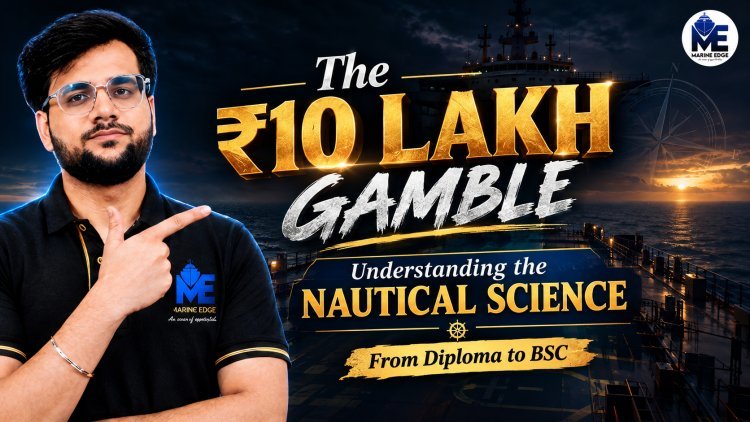
Understanding Nautical Science Courses: B.Sc Nautical Science vs DNS and Their Merchant Navy Career Paths
Confused between B.Sc Nautical Science and Diploma in Nautical Science? Understand course duration, eligibility, IMU-CET, sponsorship, sea training, career progression, officer ranks, salary potential, and how to choose the right Merchant Navy course after Class 12.
Students who want to join the Merchant Navy as Deck Officers often come across two major nautical education pathways after Class 12: B.Sc Nautical Science and Diploma in Nautical Science (DNS).
Both courses can lead toward a professional career in the deck department of merchant ships, but their academic structure, duration, admission route, sponsorship importance, and training pathway are different.
This creates a common question among Merchant Navy aspirants:
Should I choose B.Sc Nautical Science or DNS?
There is no single answer that works for every student.
A student interested in a longer undergraduate degree route may look toward B.Sc Nautical Science, while another student seeking a shorter pre-sea training route with strong company sponsorship focus may consider DNS.
However, choosing between them only on the basis of course duration can be a mistake.
Students should understand the complete pathway:
Class 12 → IMU-CET → Maritime Course → Sea Training → Competency Requirements → Officer Rank → Career Growth
This Marine Edge guide explains the major nautical science courses, their differences, career opportunities, sea-training pathways, and what aspiring Deck Officers should consider before making a decision.
Nautical Science Courses Overview
| Parameter | B.Sc Nautical Science | Diploma in Nautical Science (DNS) |
|---|---|---|
| Full Form | Bachelor of Science in Nautical Science | Diploma in Nautical Science |
| Career Department | Deck Department | Deck Department |
| Main Career Goal | Navigating Officer | Navigating Officer |
| Entry Level | After 10+2 PCM | After 10+2 PCM |
| Pre-Sea Academic Route | Degree-based | Diploma/pre-sea route |
| Typical Academic Duration | 3 Years | 1 Year pre-sea training |
| IMU-CET | Important/required as applicable | Important/required as applicable |
| Sponsorship | Depends on institute/company route | Highly important |
| Training Focus | Detailed nautical academics + practical training | Intensive nautical pre-sea training |
| Initial Shipboard Role | Deck Cadet/Trainee | Deck Cadet |
| Sea Training | Required | Required |
| Competency Process | Required | Required |
| Future Officer Path | Third Officer → Second Officer → Chief Officer → Captain | Third Officer → Second Officer → Chief Officer → Captain |
| Best Suited For | Students preferring a full undergraduate route | Students preferring a shorter sponsored pre-sea route |
What is Nautical Science?
Nautical Science is the study of subjects and practical skills required for the navigation, operation and safe management of merchant ships.
It primarily prepares students for the deck department.
A ship has several departments with different responsibilities. The deck department is particularly involved with navigation, cargo operations, safety, shipboard management and maintaining the vessel's operational readiness.
A nautical science student may study subjects connected with:
- Navigation
- Seamanship
- Ship stability
- Cargo handling
- Meteorology
- Maritime communication
- Maritime regulations
- Ship construction
- Safety procedures
- Bridge equipment
- Watchkeeping
- Emergency response
However, completing academic education alone does not immediately make a student a senior navigating officer.
Academic training is only the beginning of the professional pathway.
What is B.Sc Nautical Science?
B.Sc Nautical Science is an undergraduate degree pathway designed for students interested in becoming Deck Officers in the Merchant Navy.
The course generally provides a broader academic foundation because students spend a longer period studying nautical subjects before progressing further into their sea-going career.
During the program, students develop knowledge related to ship navigation, maritime operations, safety and professional seamanship.
The course is suitable for students who want a structured undergraduate maritime education while preparing for the deck officer career pathway.
What Do Students Study in B.Sc Nautical Science?
The exact curriculum depends on the institution and applicable academic framework, but students generally encounter subjects related to maritime operations.
Navigation
Navigation is one of the most important areas for a future Deck Officer.
Students gradually learn concepts connected with determining and monitoring the vessel's position and planning safe voyages.
Modern ships use advanced navigation equipment, but officers still need strong theoretical fundamentals.
Seamanship
Seamanship introduces students to practical aspects of working on ships.
It can include areas related to:
- Mooring
- Anchoring
- Ropes
- Shipboard equipment
- Deck maintenance
- Safe working practices
Ship Stability
Ship stability helps students understand how loading, weight distribution and external forces affect the vessel.
This becomes extremely important during actual ship operations.
Cargo Operations
Merchant ships transport different types of cargo.
Deck Officers need to understand the safe handling, loading, securing and monitoring of cargo according to their responsibilities and vessel type.
Meteorology
Weather has a major influence on navigation.
Students therefore develop an understanding of weather systems and how environmental conditions can affect ship operations.
Maritime Safety
Safety is fundamental to the maritime industry.
Students are trained to understand emergency procedures, survival techniques and professional safety culture.
What is DNS in Merchant Navy?
DNS stands for Diploma in Nautical Science.
It is another popular route for students who want to build a career in the deck department.
The reference Marine Edge format describes DNS as a 1-year residential pre-sea training route, followed by the required sea-training and competency stages.
The biggest attraction of DNS for many students is that the initial pre-sea academic phase is shorter than a conventional three-year B.Sc route.
However, students should not misunderstand this.
A shorter classroom phase does not mean becoming a Captain or officer immediately.
After pre-sea training, the cadet still needs to complete the applicable sea-service and competency requirements.
DNS Training Structure
The DNS journey can be understood in three broad phases.
Phase 1: Pre-Sea Training
The academic/pre-sea phase is typically one year in the reference format.
Students learn subjects such as:
- Navigation
- Ship stability
- Cargo handling
- Maritime law
- Meteorology
- Communication systems
- Safety training
- Practical simulator work
These areas prepare students for the next major stage: onboard training.
Phase 2: Sea Training
After completing the required pre-sea training, the cadet moves toward onboard training.
This is where theoretical concepts begin to make practical sense.
A cadet observes and participates in actual ship operations under supervision.
The reference Marine Edge article describes the DNS pathway as including 18 months of sea training before the relevant competency stage.
Phase 3: Competency
After completing the applicable training and sea-service requirements, candidates move toward the required competency process.
This is a crucial stage because professional officer progression depends on satisfying the applicable requirements rather than merely finishing college.
B.Sc Nautical Science vs DNS: What is the Main Difference?
Both routes can lead toward the deck department, but their educational structure differs.
B.Sc Nautical Science
This is primarily a degree-oriented pathway.
Students spend more time in formal academic education before progressing through the professional sea-going pathway.
DNS
DNS provides a shorter initial pre-sea route and places significant importance on the connection between pre-sea education and company-linked sea training.
This is one reason why sponsorship is discussed so frequently among DNS aspirants.
Why Sponsorship is Important for DNS
This is one of the most important concepts for students to understand.
A DNS sponsorship generally refers to selection or support from a shipping company for the cadet's career/training pathway, subject to the company's conditions and applicable requirements.
Students often apply for sponsorship selections before starting DNS.
The selection process can include stages such as:
- Written examination
- Mathematics
- Physics
- English
- Aptitude
- Reasoning
- Psychometric assessment
- Personal interview
- Medical examination
The exact selection process differs between companies.
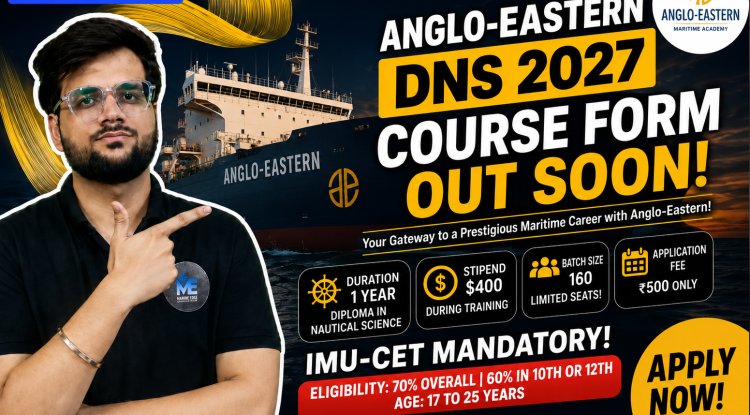
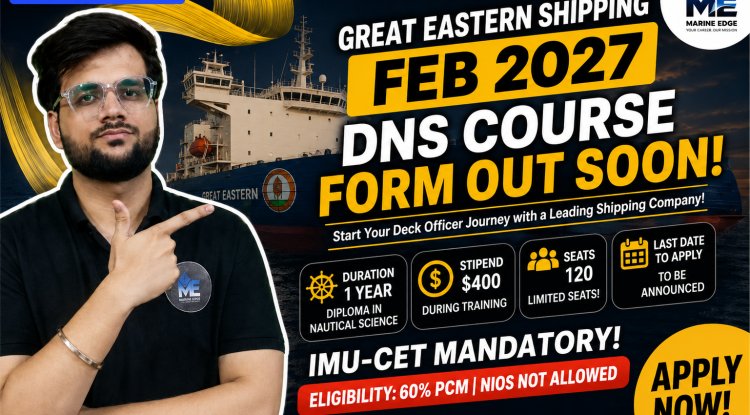
The Marine Edge reference highlights companies such as Synergy Marine, Anglo-Eastern, Fleet Management, Great Eastern, MSC and TORM among the names DNS aspirants commonly consider for sponsorship opportunities.
Students should always check current company notifications because eligibility and selection processes can change from one intake to another.
IMU-CET and Nautical Science Admission
IMU-CET is an important entrance examination for students planning maritime education through relevant Indian Maritime University pathways.
Students preparing for nautical science should build strong fundamentals in the subjects applicable to their admission cycle.
The reference article identifies areas such as:
- Physics
- Chemistry
- Mathematics
- English
- General Aptitude
- General Knowledge
Aspirants should not prepare only to achieve the minimum qualifying requirement.
A stronger rank can improve the student's options depending on the course, institution and counselling process.
Eligibility for Nautical Science Courses
Eligibility differs according to the course, institution, company and admission year.
Students generally need a Class 12 PCM background for major deck-officer nautical education routes.
The Marine Edge DNS reference uses:
Physics + Chemistry + Mathematics: 60% aggregate
English: 50% in Class 10 or Class 12
for its 2026 DNS guidance.
However, students should not automatically apply these figures to every B.Sc or company-sponsored program.
Individual institutes and sponsorship companies can maintain additional criteria.
Always verify the current admission notification before applying.
Medical Fitness for a Deck Career
Medical fitness is extremely important for nautical careers.
Students should investigate their medical eligibility before investing heavily in preparation or admission.
Deck-side medical requirements can be strict because navigating officers perform safety-critical duties.
The Marine Edge DNS reference highlights areas including eyesight, colour vision, hearing and general physical fitness, with certification through a DG Shipping-approved medical practitioner.
Medical standards should always be checked against the current official requirements applicable to the course and career pathway.
What Happens After Completing Nautical Science?
Students sometimes assume:
Complete course → Become officer
The real process contains more stages.
A simplified career journey is:
Class 12 PCM
↓
IMU-CET / Required Selection
↓
B.Sc Nautical Science or DNS
↓
Pre-Sea Training
↓
Ship Joining
↓
Deck Cadet / Training
↓
Required Sea Service
↓
Competency Requirements
↓
Junior Navigating Officer
↓
Higher Sea Service + Competency
↓
Senior Officer Ranks
The important point is that sea service and professional competency are essential parts of the career.
Career After B.Sc Nautical Science
Students completing the B.Sc route can progress toward a professional navigating career after satisfying the required sea-training and competency stages.
The long-term deck career can progress toward:
Deck Cadet / Trainee
↓
Third Officer
↓
Second Officer
↓
Chief Officer
↓
Captain / Master
Each promotion brings additional responsibilities.
Career After DNS
The professional destination of DNS can also be the deck officer pathway.
The Marine Edge reference illustrates the progression as:
Deck Cadet → Third Officer → Second Officer → Chief Officer → Captain.
Therefore, students should not think that DNS leads to a lower final career ceiling simply because its initial academic format differs from B.Sc Nautical Science.
Both routes can ultimately lead toward senior deck positions when all applicable professional requirements are completed.
What Does a Deck Cadet Do?
A Deck Cadet is essentially a trainee in the deck department.
The cadet learns under experienced officers and gradually develops practical understanding of ship operations.
Depending on the vessel and training requirements, learning can involve areas connected with:
- Navigation
- Watchkeeping
- Deck maintenance
- Safety equipment
- Mooring operations
- Cargo operations
- Documentation
- Emergency drills
Cadetship is one of the most important learning periods in a seafarer's career.
Students who use this period seriously build a much stronger foundation for future officer responsibilities.
Third Officer Career
After completing the required training and competency process, a cadet can progress toward a junior navigating officer role.
A Third Officer typically carries greater professional responsibility than a cadet.
Safety equipment and navigational watchkeeping can form important parts of junior officer responsibilities depending on the ship and company.
This is the stage where the individual is no longer simply observing.
Professional accountability becomes much greater.
Second Officer Career
With further experience and competency progression, an officer can move toward the Second Officer rank.
Navigation and voyage-planning responsibilities are commonly associated with this level.
A Second Officer needs strong navigational knowledge, attention to detail and professional judgement.
Chief Officer Career
The Chief Officer is one of the most senior officers onboard.
Responsibilities can include major aspects of:
- Deck operations
- Cargo operations
- Safety
- Crew management
- Maintenance planning
- Operational supervision
The position requires both technical competence and leadership.
Captain / Master
The highest deck-side position is generally the Master or Captain.
The Captain has overall command responsibility for the vessel.
This includes major responsibilities related to:
- Safe navigation
- Ship operations
- Crew
- Cargo
- Compliance
- Emergency decisions
- Communication with relevant shore authorities and company management
Reaching this rank takes years of sea-going experience, competency progression and professional development.
Salary and Career Growth
Merchant Navy salaries can vary considerably.
Important factors include:
- Rank
- Company
- Ship type
- Experience
- Contract
- Nationality/employment structure
- Vessel operations
Therefore, students should be cautious about social-media posts promising a fixed salary immediately after completing a course.
The reference Marine Edge DNS article uses indicative figures ranging from $300–$800 per month for Deck Cadets, with substantially higher figures at officer and senior officer levels.
These should be treated as illustrative ranges rather than guaranteed salaries.
Which is Better: B.Sc Nautical Science or DNS?
The better option depends on the student.
Choose B.Sc Nautical Science if:
You prefer a full undergraduate academic route.
You want a longer structured nautical education before progressing further into the sea-going pathway.
You have identified an institute and training pathway that fits your career plan.
Consider DNS if:
You want a shorter initial pre-sea training pathway.
You are actively preparing for company sponsorship selections.
You understand the importance of obtaining a reliable sea-training pathway.
You are comfortable with a highly career-focused route toward deck officer training.
The most important point is:
Do not choose a course only because someone says it is easier, faster or pays more.
Evaluate the complete career pathway.
Common Mistakes Students Make
One common mistake is focusing entirely on salary.
Another is selecting a maritime college without checking the applicable approval or current admission requirements.
Some students also underestimate medical standards.
Others believe qualifying IMU-CET automatically guarantees sponsorship.
Students can also make the mistake of preparing for PCM questions while ignoring English, aptitude, communication and interview preparation.
A strong candidate prepares for the complete selection process.
Frequently Asked Questions
Is B.Sc Nautical Science a degree?
Yes. B.Sc Nautical Science is an undergraduate degree route related to professional nautical education.
Is DNS a degree?
DNS is Diploma in Nautical Science, structured as a different pathway from the three-year B.Sc Nautical Science route.
Can DNS students become Captains?
Yes. DNS can lead toward the deck officer pathway. After completing the applicable sea service, competency examinations and professional progression, a candidate can work toward senior ranks including Captain/Master.
Can B.Sc Nautical Science students become Captains?
Yes. B.Sc Nautical Science students can also progress through the deck officer pathway after satisfying the required professional stages.
Which course is shorter?
The initial DNS pre-sea course is considerably shorter than a conventional three-year B.Sc Nautical Science program.
Is sponsorship important for DNS?
Yes. Students should give serious importance to securing an appropriate sea-training/company pathway when considering DNS.
Is IMU-CET required?
IMU-CET is important for applicable IMU-linked maritime admission pathways. Students should verify the requirements for their specific admission year and program.
Can girls join Nautical Science?
Yes. Eligible female candidates can pursue deck-side maritime careers subject to the applicable academic, medical, admission and company requirements.
Which has a higher salary: DNS or B.Sc Nautical Science?
Salary is primarily influenced by rank, company, vessel, experience and employment terms, rather than simply whether the officer originally studied DNS or B.Sc Nautical Science.
Which course should I choose after Class 12?
Choose based on your academic preference, financial planning, sponsorship opportunities, institute, sea-training pathway, medical eligibility and long-term career objective.
Marine Edge Guidance for Nautical Science Aspirants
Choosing between B.Sc Nautical Science and DNS should be based on proper career planning rather than online hype.
At Marine Edge, we encourage aspirants to understand the entire pathway before submitting applications.
A student should know:
Which course am I eligible for?
Do I satisfy maritime medical requirements?
Is IMU-CET required?
Does the program provide a clear sea-training pathway?
Do I need company sponsorship?
What selection stages should I prepare for?
How will I progress toward an officer rank?
Once these questions are clear, course selection becomes much easier.
How Marine Edge Helps Nautical Science Aspirants
IMU-CET Preparation Strategy
Focused preparation for Mathematics, Physics, Chemistry, English, aptitude and other relevant areas to improve examination performance.
DNS Sponsorship Exam Guidance
Preparation for company-level written tests involving PCM, aptitude, reasoning and English.
Interview Preparation
Build confidence, improve communication and understand the type of maritime awareness expected during selection interviews.
Psychometric Test Guidance
Learn how to approach psychometric assessments carefully and consistently.
Medical & Documentation Guidance
Understand maritime medical requirements and prepare important documents before admission and company selection stages.
Real-Time Merchant Navy Updates
Stay informed about sponsorship openings, maritime admissions, counselling schedules, examination dates and selection processes.
Final Insight
B.Sc Nautical Science and DNS are not competing destinations—they are different educational routes toward a similar professional goal.
That goal is to develop into a competent navigating officer.
A B.Sc student may spend longer in the initial academic environment, while a DNS candidate follows a shorter pre-sea route with strong emphasis on sponsorship and sea-training planning.
But once professional careers develop, success depends on much more than the name of the initial course.
It depends on:
Knowledge.
Sea experience.
Competency.
Discipline.
Safety awareness.
Communication.
Leadership.
A student entering nautical education today can potentially progress from Deck Cadet to Third Officer, Second Officer, Chief Officer and eventually Captain, provided the required professional stages are successfully completed.
Choose your course carefully.
Prepare for IMU-CET seriously.
Understand sponsorship before taking DNS admission.
Verify medical eligibility early.
And most importantly, think beyond college admission.
Your real objective is not simply to enter a maritime institute. Your objective is to build a professional career at sea
Stay Updated with Marine Edge
For verified Merchant Navy form openings, sponsored DNS programs, IMU-CET updates, and preparation guidance, follow Marine Edge.
Join Marine Edge Telegram for regular updates:
Join Marine Edge WhatsApp Group:
https://chat.whatsapp.com/Kosy0usp3q77tUTkk6JBj4?mode=gi_t
Follow Marine Edge WhatsApp Channel:
https://whatsapp.com/channel/0029Vb66BOeLNSZuz7Z1Fb0R
Apply early. Prepare smart.
Marine Edge is here to guide you
What's Your Reaction?