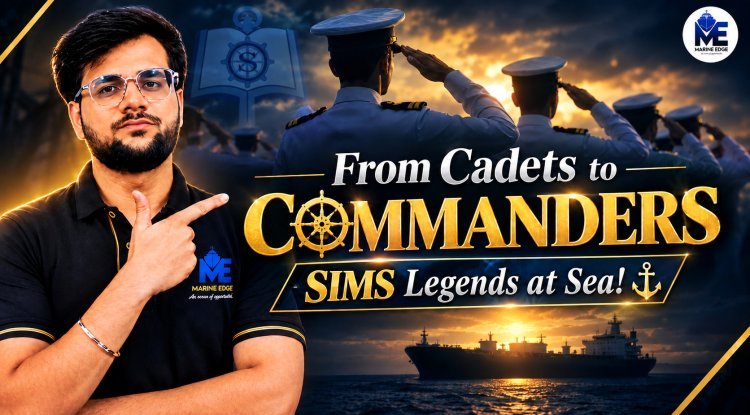
From Cadets to Commander Sims legend of seas
Explore Samundra Maritime SIMS alumni success stories, cadet training, ship joining, officer career progression and lessons for Merchant Navy aspirants.
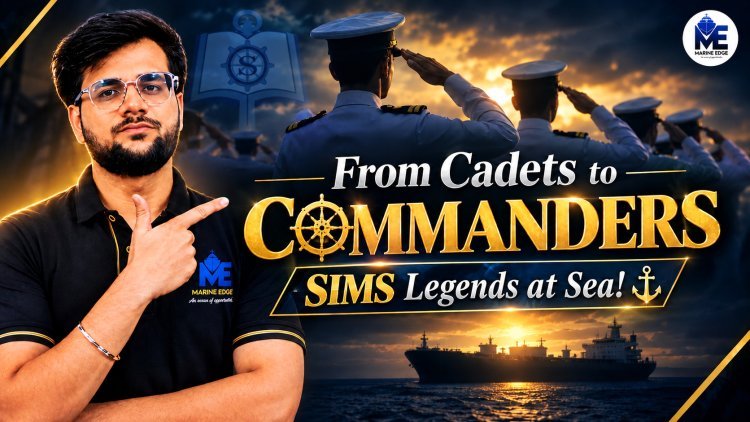
Samudra Maritime SIMS and SIMS Alumni Success Stories
Samudra Maritime SIMS Success Stories: How Cadets Build Careers from Maritime Training to Sailing at Sea
Explore Samundra Institute of Maritime Studies (SIMS), its maritime training environment, cadet journey, alumni career progression, onboard opportunities, and how aspiring Merchant Navy students can prepare for a professional career at sea.
For many students planning to enter the Merchant Navy, choosing the right maritime training institute is one of the most important decisions after Class 12 or graduation. A maritime institute does much more than provide academic education. It introduces cadets to the discipline, technical knowledge, practical skills, safety culture, and professional standards required for life onboard a merchant vessel.
Samundra Institute of Maritime Studies (SIMS) is one of the well-known names among Indian maritime aspirants. Students often search for SIMS not only because of its courses and infrastructure but also because they want to understand what happens after training.
Questions such as these are common:
- What kind of career can a SIMS cadet build?
- How does institute training translate into actual shipboard work?
- What happens after completing pre-sea training?
- How do cadets progress toward officer ranks?
- What can new aspirants learn from the journeys of previous cadets?
The real value of an alumni success story is not simply the final rank achieved by a seafarer. The complete journey—from being a student with little maritime exposure to becoming a trained cadet and eventually progressing through professional competency—is what aspiring students should understand.
This guide explains the SIMS cadet-to-seafarer journey, what students can learn from alumni career paths, the importance of training and sea time, and how future Merchant Navy aspirants can prepare themselves for similar opportunities.
SIMS Maritime Career Overview
| Particulars | Details |
|---|---|
| Institute | Samundra Institute of Maritime Studies (SIMS) |
| Industry | Maritime Education & Training |
| Career Sector | Merchant Navy |
| Main Career Streams | Deck / Marine Engineering |
| Training Focus | Academic + Practical + Safety Training |
| Initial Career Stage | Maritime Cadet / Trainee |
| Workplace After Training | Merchant Ships |
| Deck Career Direction | Cadet → Navigating Officer → Senior Officer |
| Engine Career Direction | Trainee → Marine Engineer → Senior Engineer |
| Important Skills | Discipline, technical knowledge, communication, teamwork |
| Major Career Requirement | Approved training + required sea service + competency requirements |
| Career Nature | International and sea-going |
| Long-Term Opportunities | Senior shipboard positions and shore-based maritime careers |
| Preparation Required | Academics, aptitude, interview, medical fitness, and professional readiness |
| Best For | Students serious about a long-term Merchant Navy career |
What is Samundra Institute of Maritime Studies?
Samundra Institute of Maritime Studies is a maritime training institute that prepares candidates for careers in the shipping industry.
Maritime education is different from a conventional college experience because cadets are preparing for a profession where safety, discipline, responsibility, and teamwork have direct consequences onboard ships.
Training therefore needs to develop more than academic knowledge.
A cadet must gradually learn how to:
- Follow professional procedures
- Work as part of a shipboard team
- Understand maritime safety
- Develop technical competence
- Communicate clearly
- Respond appropriately to emergencies
- Maintain discipline
- Take responsibility for assigned duties
This transition from an ordinary student to a maritime professional is an important part of the training journey.
Why SIMS Alumni Success Stories Matter
Students sometimes judge a maritime institute only through infrastructure photographs, course fees or promotional material.
Alumni career journeys provide another useful perspective.
They help aspirants understand what maritime education is ultimately designed to achieve.
A successful maritime career usually does not happen immediately after completing a course. It develops through several stages involving training, sea service, examinations, professional competency and experience.
Therefore, when looking at a successful alumnus, students should pay attention to the journey rather than only the final position.
For example, an experienced senior officer may have started as a cadet handling basic responsibilities under supervision.
That progression teaches an important lesson:
Merchant Navy career growth is built rank by rank.
From Student to Seafarer: The SIMS Journey
A typical maritime career can be understood through several stages.
Stage 1: Entering Maritime Training
The first major step is admission into an appropriate maritime program.
Candidates generally need to satisfy the academic, age, medical and course-specific requirements applicable to their chosen route.
However, eligibility should never be confused with selection.
Meeting minimum eligibility means that a candidate can apply. It does not automatically mean that the candidate is prepared for the maritime profession.
Students should develop good fundamentals in areas such as:
Physics
Important for understanding forces, pressure, mechanics, energy and many technical principles used in maritime studies.
Mathematics
Useful for calculations, navigation-related concepts and engineering applications.
English
Extremely important because maritime communication, documentation, instructions and professional interaction require clear communication.
Aptitude and Reasoning
These areas are commonly important during maritime selection and training.
Stage 2: Learning Maritime Discipline
One of the biggest changes students experience after entering maritime education is the structured environment.
A ship cannot operate efficiently if every crew member follows their own system.
Professional seafarers must understand:
- Time management
- Personal responsibility
- Safety procedures
- Team coordination
- Reporting structures
- Professional communication
- Respect for procedures
For this reason, discipline during maritime education should not be viewed simply as a college rule.
It prepares students for shipboard life.
A cadet who develops punctuality, responsibility and consistency during training is better prepared for the professional expectations that follow.
Stage 3: Building Technical Knowledge
Depending on the chosen career stream, cadets develop different technical competencies.
Deck-Side Learning
Students moving toward deck careers may study areas related to:
- Navigation
- Seamanship
- Cargo operations
- Ship stability
- Meteorology
- Maritime regulations
- Safety
- Communication
- Bridge procedures
These subjects form the academic foundation for future navigating officers.
Engine-Side Learning
Students entering marine engineering focus more strongly on:
- Marine machinery
- Thermodynamics
- Engines
- Pumps
- Electrical systems
- Maintenance
- Workshop practices
- Auxiliary machinery
- Safety systems
The objective is not merely to pass examinations.
Cadets must eventually apply these concepts onboard actual ships.
Stage 4: Practical Maritime Training
Practical exposure is a crucial part of maritime education.
Ships are highly technical working environments. Students therefore need opportunities to understand equipment, procedures and emergencies beyond textbooks.
Practical maritime education can involve training connected with:
- Firefighting
- Survival procedures
- Workshops
- Machinery
- Navigation
- Safety equipment
- Emergency response
- Seamanship
- Simulator-based exercises
Simulators are especially useful because they allow cadets to experience realistic situations in a controlled environment.
For example, students can learn how a professional team responds when conditions suddenly change without exposing an actual ship or crew to unnecessary risk.
Stage 5: Transitioning from Campus to Ship
For many cadets, joining their first vessel is the most memorable stage of their maritime journey.
Until this point, much of their knowledge has been developed in classrooms, workshops and training environments.
Onboard, that knowledge becomes practical.
The cadet starts observing how a commercial vessel actually operates.
This can include:
- Watchkeeping routines
- Maintenance schedules
- Safety drills
- Equipment checks
- Shipboard communication
- Documentation
- Cargo-related operations
- Daily work routines
The first ship is also where many cadets realize that the Merchant Navy requires much more than technical knowledge.
Professional attitude becomes equally important.
The First Voyage: Where Real Learning Begins
A cadet's first voyage can be challenging because almost everything is new.
The scale of the vessel, machinery, responsibilities and working environment can be very different from college training.
Cadets must learn to observe experienced officers carefully.
They should ask relevant questions, maintain records, complete assigned tasks seriously and use every opportunity to understand actual ship operations.
This is where qualities developed during institute training become valuable.
Discipline helps cadets follow schedules.
Communication helps them understand instructions.
Technical knowledge helps them understand equipment.
Teamwork helps them integrate with multinational crews.
Safety training helps them respond correctly during drills and emergencies.
The first sailing experience is therefore a bridge between maritime education and professional competency.
SIMS Alumni Career Progression
One of the strongest lessons from maritime alumni journeys is that career development is progressive.
A student does not directly become Captain or Chief Engineer after completing college.
The person moves through structured professional stages.
Typical Deck Career Progression
A simplified deck-side progression can look like:
Deck Cadet
↓
Junior Navigating Officer / Third Officer
↓
Second Officer
↓
Chief Officer
↓
Master / Captain
Each promotion requires the appropriate combination of sea service, competency, examinations and professional experience.
Responsibilities also increase significantly with rank.
A cadet begins by learning.
A junior officer begins taking independent professional responsibility.
A Chief Officer manages major deck operations.
A Master carries the highest command responsibility onboard.
That is why reaching senior ranks is a major professional achievement.
Marine Engineering Career Progression
The engine department follows a different professional route.
A simplified progression may look like:
Trainee Marine Engineer
↓
Junior Engineer / Fourth Engineer
↓
Third Engineer
↓
Second Engineer
↓
Chief Engineer
Engineering officers are responsible for keeping critical machinery and technical systems operational.
As an engineer progresses, the level of technical and managerial responsibility increases.
A Chief Engineer is responsible for the vessel's engineering department and must combine technical expertise with leadership and decision-making.
What Makes a Maritime Alumni Story Successful?
Success in the Merchant Navy should not be measured only by salary.
A genuinely successful seafarer normally develops several qualities.
Professional Competence
An officer must understand the job thoroughly.
At sea, incomplete knowledge can create serious consequences.
Safety Awareness
Safety is central to maritime operations.
Successful officers develop the habit of evaluating risks before acting.
Leadership
Senior officers manage people as well as equipment.
They need to communicate instructions clearly and make decisions responsibly.
Continuous Learning
Technology and maritime practices continue to develop.
A professional seafarer must therefore continue learning throughout their career.
Reliability
Shipping companies depend heavily on people who consistently perform their duties professionally.
Reputation develops over multiple contracts and years of service.
Skills Students Can Learn from Successful SIMS Alumni
Aspiring cadets can learn several lessons from experienced maritime professionals.
Consistency matters more than temporary motivation.
Merchant Navy preparation is a long process involving academics, selection, training, sea time and professional examinations.
Communication matters.
Technical knowledge alone is not enough when working with officers and crew from different backgrounds.
Practical understanding matters.
Students should understand why a procedure is performed instead of memorizing it blindly.
Professional behaviour matters.
Punctuality, respect, responsibility and willingness to learn influence how cadets are perceived onboard.
Patience matters.
Maritime careers develop over years rather than weeks.
Life After Becoming an Officer
Obtaining an officer rank is a major milestone, but professional development continues.
An officer becomes responsible for important shipboard operations.
For deck officers, responsibilities can include navigation, watchkeeping, cargo operations and safety.
For engineering officers, responsibilities can include machinery operation, maintenance and technical troubleshooting.
As rank increases, leadership responsibilities also increase.
This means that career growth is not simply about receiving a higher salary.
It means accepting greater responsibility for the vessel, crew, cargo and safe operation.
Opportunities Beyond Sailing
A maritime career does not necessarily mean remaining at sea for an entire working life.
Experienced seafarers can eventually explore shore-based opportunities depending on their qualifications, experience and industry requirements.
Potential maritime shore careers may include areas such as:
- Marine operations
- Technical management
- Ship management
- Maritime training
- Safety management
- Marine surveying
- Port-related operations
- Fleet support
- Maritime consultancy
Senior shipboard experience can be particularly valuable because the person understands how ships operate in real conditions.
What Class 12 Students Should Learn from SIMS Alumni
Students should avoid looking at successful officers and thinking only about the final salary or rank.
Instead, look at the stages that created that career.
A typical journey requires:
Class 12 PCM preparation
↓
Entrance/selection preparation
↓
Medical fitness
↓
Maritime training
↓
Practical training
↓
First ship joining
↓
Required sea service
↓
Competency examinations
↓
Officer rank
↓
Additional sea experience
↓
Higher competency
↓
Senior officer rank
This is why preparation at the beginning matters.
Every stage contributes to the next.
Is SIMS a Good Choice for Merchant Navy Aspirants?
Students should evaluate any maritime institute based on factors relevant to their particular course and career objective.
Instead of selecting an institute only because of online popularity, check factors such as:
- Course approval
- Current eligibility requirements
- Training structure
- Practical facilities
- Company-linked opportunities where applicable
- Medical requirements
- Course costs
- Selection process
- Sea-training pathway
- Career progression
Most importantly, verify current information from official sources before making admission or financial decisions because maritime admission requirements can change between batches.
Frequently Asked Questions (FAQs)
What is SIMS?
SIMS stands for Samundra Institute of Maritime Studies, a maritime training institute associated with education and preparation for careers in the shipping industry.
Can a Class 12 student apply to SIMS?
Students completing Class 12 can explore maritime programs for which they meet the applicable academic, age and medical requirements. Eligibility depends on the particular program and admission cycle.
Does joining a maritime institute directly make you an officer?
No. Institute training is one stage of the career pathway. Cadets must complete the required training, sea service and applicable competency requirements before progressing to officer ranks.
What can students learn from SIMS alumni?
The biggest lesson is the importance of long-term professional development. Successful seafarers generally progress from training to sea service and then through different competency and officer stages.
Is Merchant Navy training difficult?
Maritime training requires academic preparation, physical fitness, discipline and adaptability. Students who enter with the right expectations generally find it easier to adjust to the professional environment.
Can SIMS graduates become Captains?
A cadet entering the deck officer pathway can eventually progress toward senior deck ranks, including Master/Captain, after satisfying the required sea-service, competency and examination requirements.
Can marine engineering students become Chief Engineers?
Yes. Marine engineers can progress through engineering officer ranks and eventually work toward senior engineering positions such as Chief Engineer after meeting the required professional requirements.
Is life onboard different from maritime college?
Yes. College provides a controlled training environment, while a ship is an operational workplace. Cadets must apply their knowledge while adapting to actual schedules, responsibilities and professional expectations.
Is communication important in the Merchant Navy?
Yes. Ships can have multinational crews, and clear professional communication is essential for routine operations and safety.
Should students choose Merchant Navy only because of salary?
Salary can be attractive, but students should also understand sea life, long contracts, professional responsibility, medical standards, examinations and the disciplined nature of maritime work before choosing the career.
Marine Edge Guidance for SIMS Aspirants
Getting admission into a maritime institute is only the beginning.
At Marine Edge, we believe students should prepare for the complete journey—from entrance and company selection to interview preparation, medical fitness and eventually professional life at sea.
A candidate may satisfy the academic eligibility requirements but still struggle during selection if aptitude, communication, confidence, or maritime awareness is weak.
That is why preparation should begin well before the actual selection process.
How Marine Edge Helps Merchant Navy Aspirants
IMU-CET Preparation Strategy
Focused preparation for Mathematics, Physics, Chemistry, English, General Aptitude and other areas relevant to IMU-CET preparation.
Sponsorship Exam Guidance
Preparation for company selection processes, including aptitude, PCM concepts, English and reasoning.
Interview Preparation
Students can work on communication, confidence, personal introduction, maritime awareness and common interview areas.
Psychometric Test Support
Understanding the nature of psychometric assessments can help students approach them consistently and professionally.
Medical & Documentation Guidance
Students should understand applicable maritime medical standards and keep important documents ready before critical admission stages.
Merchant Navy Career Awareness
Students should know the difference between courses, departments, ranks and career pathways before making major admission decisions.
Real-Time Maritime Updates
Keeping track of application openings, sponsorship forms, admission announcements and selection schedules can prevent students from missing important opportunities.
Final Insight
SIMS alumni success stories represent something larger than individual achievements.
They demonstrate how structured maritime education can become the starting point of a long professional journey.
The transformation does not happen overnight.
It begins with a student entering maritime training and gradually developing technical knowledge, discipline, safety awareness and professional confidence. The next major transformation happens onboard, where theoretical knowledge meets actual ship operations.
Sea service and competency then open the path toward officer ranks.
With experience, examinations and increasing responsibility, today's cadet can work toward becoming tomorrow's senior officer, Captain or Chief Engineer.
For aspiring Merchant Navy students, that is the most useful lesson to take from successful alumni:
Do not focus only on where successful seafarers are today. Study the preparation, training, sea experience and professional development that helped them reach that position.
Prepare early. Build strong fundamentals. Stay disciplined.
Stay Updated with Marine Edge
For verified Merchant Navy form openings, sponsored DNS programs, IMU-CET updates, and preparation guidance, follow Marine Edge.
Join Marine Edge Telegram for regular updates:
Join Marine Edge WhatsApp Group:
https://chat.whatsapp.com/Kosy0usp3q77tUTkk6JBj4?mode=gi_t
Follow Marine Edge WhatsApp Channel:
https://whatsapp.com/channel/0029Vb66BOeLNSZuz7Z1Fb0R
Apply early. Prepare smart.
Marine Edge is here to guide you.
What's Your Reaction?