From Class 12 to Merchant Navy Officer: Complete Career Path
Learn how to join the Merchant Navy after Class 12 through DNS or B.Sc. Nautical Science, IMU-CET, sponsorship, sea training and officer certification.
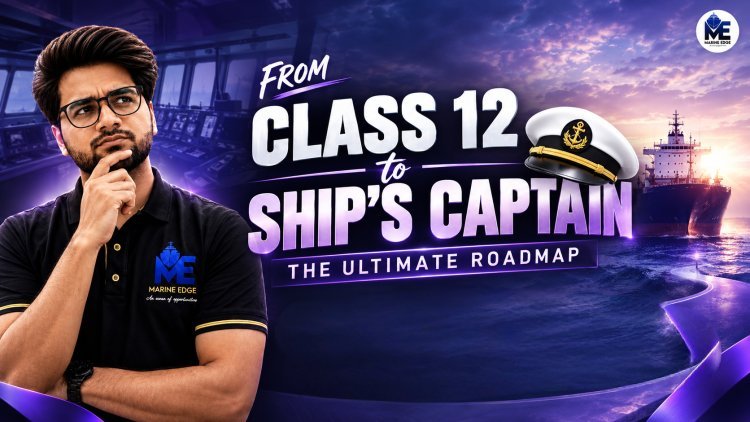
From Class 12 to Officer Status: A Clear Path Through Nautical Education
Introduction
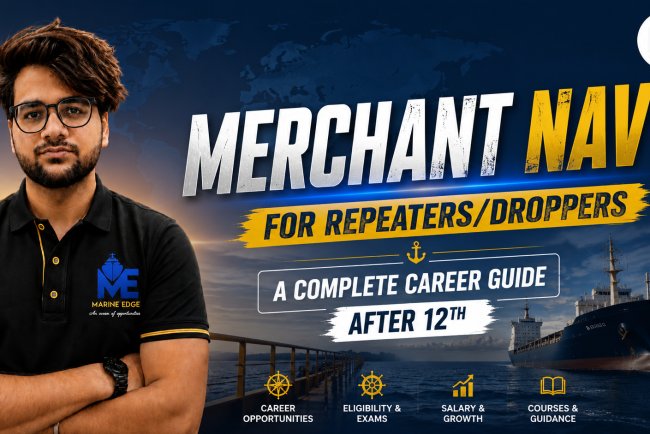
For many students completing Class 12 with Physics, Chemistry and Mathematics (PCM), the Merchant Navy offers an opportunity to build a professional career involving navigation, international trade, ship operations and leadership at sea. However, becoming a Merchant Navy officer is not simply a matter of choosing a maritime college. It requires the right educational pathway, entrance examination qualification, medical fitness, practical training, sea service and professional certification.
Students often face several questions: Should they choose Diploma in Nautical Science (DNS), B.Sc. Nautical Science or B.Tech. Marine Engineering? Is sponsorship necessary? What happens after completing the course? How does a student progress from a trainee cadet to a qualified officer or Captain?
Understanding these stages before applying can help candidates make informed decisions and avoid common admission mistakes.
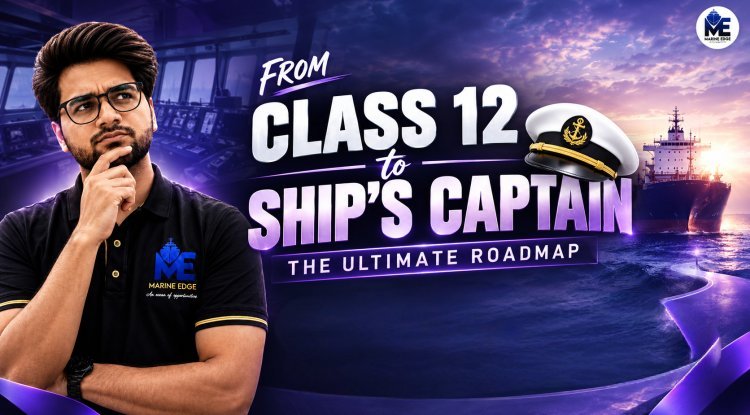
This Marine Edge guide explains the pathway from Class 12 to professional officer status, focusing on nautical education, DNS sponsorship, IMU-CET, onboard training and long-term career progression.
Overview: From Class 12 to a Merchant Navy Officer
| Category | Details |
|---|---|
| Starting qualification | Class 12 with Physics, Chemistry and Mathematics for the standard school-leaver pathway |
| Main deck-side pathways | Diploma in Nautical Science (DNS) and B.Sc. Nautical Science |
| Entrance examination | IMU-CET, subject to the applicable admission rules |
| Sponsorship | Required for DNS admission through affiliated institutes under the applicable IMU rules |
| Pre-sea training | Depends on the selected programme |
| First shipboard role | Deck Cadet or trainee deck officer |
| Practical requirement | Prescribed onboard training and sea service |
| Professional certification | Applicable Certificate of Competency after completing the required training and examinations |
| Long-term career | Officer ranks, Chief Officer and potentially Master/Captain |
| Medical fitness | Must meet applicable DG Shipping standards |
1. Understanding the Merchant Navy Career Structure
The Merchant Navy operates commercial vessels that transport cargo, petroleum products, containers, gas, vehicles and other goods around the world. A ship requires qualified personnel to navigate safely, manage cargo, maintain machinery and follow international maritime regulations.
Broadly, a ship's professional structure includes two major departments.
Deck Department
The deck department is responsible for navigation, bridge watchkeeping, cargo operations, shipboard safety, passage planning and many aspects of vessel management.
Students who choose DNS or B.Sc. Nautical Science generally pursue this pathway.
A typical progression is:
DNS/B.Sc. Nautical Science → Deck Cadet → Required Sea Service and Training → Second Mate Certificate of Competency → Officer Ranks → Chief Officer → Master/Captain
The precise rank sequence and the time needed for promotion depend on the applicable certification framework, sea service, examinations, company requirements and available positions.
Marine Engineering Department
Marine engineers work with propulsion machinery, generators, auxiliary systems, pumps, fuel systems and other technical equipment onboard vessels.
The B.Tech. Marine Engineering route is a separate educational pathway. Students choosing it should understand that its training, professional examinations and career progression differ from those of the deck department.
Important: DNS and B.Sc. Nautical Science are deck-oriented pathways. Students who want to become marine engineers should investigate the appropriate marine engineering programme instead.
2. Eligibility After Class 12
Class 12 PCM is the standard starting point for students considering a career as a deck officer.
However, eligibility requirements can differ between institutes, sponsoring companies and individual admission cycles. Candidates must therefore check the current official prospectus before applying.
Educational Qualification
Students should generally have completed Class 12 with Physics, Chemistry and Mathematics from a recognised board.
The minimum percentage required in PCM and English must be checked against the applicable institute and company criteria. Some sponsorship programmes set requirements higher than the minimum regulatory or university criteria.
For example, Anglo-Eastern Maritime Academy's published DNS eligibility information specifies a minimum of 70% in PCM and 65% overall for the Class 12 pathway, alongside its stated English and age requirements.
English Requirement
English is important because bridge communication, navigation instructions, safety procedures, manuals and international maritime communication require clear understanding.
Candidates should check whether the applicable rules require a particular English percentage in Class 10, Class 12 or another qualifying examination.
Age Criteria
The permitted age range depends on the programme and admission rules. Sponsoring companies may impose their own eligibility conditions in addition to general requirements.
Candidates should calculate their age on the exact reference date specified in the relevant admission notice rather than relying on a general age limit found online.
Medical Fitness
Students must satisfy the applicable maritime medical standards, including eyesight and colour-vision requirements. The relevant medical examination should be completed through an appropriately authorised medical examiner.
Medical fitness is a fundamental eligibility requirement, not a formality that can safely be postponed until the end of admission.
Passport and Documents
Students should prepare their academic certificates, identity documents, photographs and other requested records. Obtaining a passport early is advisable because it can prevent avoidable delays during admission and subsequent international travel formalities.
3. IMU-CET: An Important Step in Nautical Education
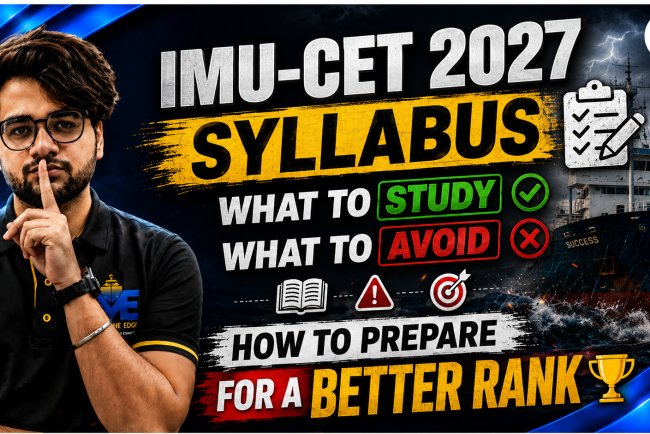
The Indian Maritime University Common Entrance Test, commonly called IMU-CET, is an important examination for candidates pursuing maritime programmes.
For DNS admission through affiliated institutes, candidates must satisfy the applicable IMU-CET and sponsorship requirements. The current admission rules should be checked for the specific batch.
Students should not assume that clearing a company sponsorship examination automatically replaces IMU-CET.
How to Prepare for IMU-CET
A structured preparation plan should cover:
-
Physics: Fundamental concepts, formula application and numerical problems.
-
Mathematics: Algebra, trigonometry, coordinate geometry, calculus and other syllabus-based topics.
-
English: Grammar, vocabulary and reading comprehension.
-
General aptitude: Logical reasoning and numerical ability where included in the applicable examination pattern.
Candidates should verify the official syllabus and examination instructions for their target admission year.
Recommended Preparation Strategy
Begin with the fundamentals rather than immediately attempting difficult mock tests. Build topic-wise accuracy, practise timed questions and maintain a record of recurring mistakes.
In the final preparation phase, use mock examinations to improve speed, time management and confidence. A good preparation strategy combines concept revision, regular practice and analysis of incorrect answers.
4. Choosing Between DNS and B.Sc. Nautical Science
Both DNS and B.Sc. Nautical Science are deck-side educational pathways, but their structure and admission arrangements differ.
Diploma in Nautical Science (DNS)
DNS is a commonly selected pathway for students seeking a company-linked route into the deck department.
The pre-sea course generally lasts one year. Admission to DNS through affiliated institutes requires sponsorship under the applicable IMU rules, as well as qualification in IMU-CET and satisfaction of other admission conditions.
After pre-sea training, cadets undertake the prescribed onboard training and subsequent academic and competency requirements.
The key point is that students should assess the sponsorship and sea-training pathway before choosing an institute.
B.Sc. Nautical Science
B.Sc. Nautical Science is an undergraduate deck-oriented programme that generally takes three years.
It provides a structured academic foundation in navigation, seamanship, ship operations and related subjects. Students must still satisfy the relevant admission, medical, practical-training and professional certification requirements.
The exact route to sea training and later competency certification should be verified for the selected institution and batch.
Which Pathway Is Better?
There is no single answer for every student.
DNS may suit candidates seeking a sponsored route through an affiliated institute, while B.Sc. Nautical Science may appeal to those who prefer a longer undergraduate academic programme.
Students should compare the following before deciding:
-
Whether the required sponsorship is available.
-
The institute's approval and affiliation status.
-
Course duration and total payable fees.
-
The company's published sea-training arrangements.
-
Medical and academic eligibility.
-
The complete route to professional certification.
Never select a programme based only on advertisements promising a high salary or guaranteed employment.
5. Why Sponsorship Matters in the DNS Pathway
Sponsorship is a particularly important consideration for DNS aspirants.
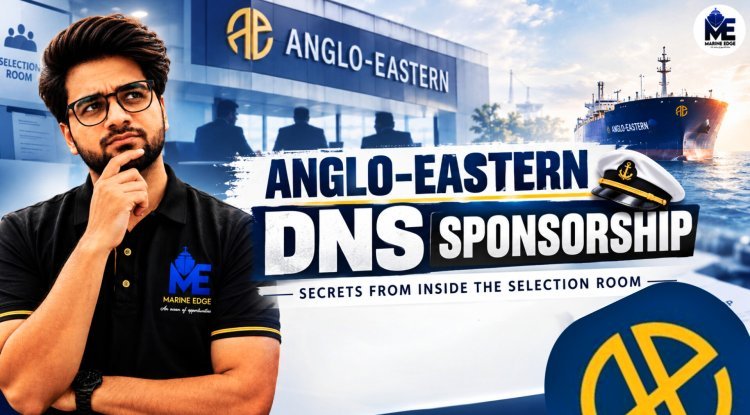
Under the applicable IMU admission rules, DNS admission through affiliated institutes is restricted to sponsored candidates. Sponsorship connects the candidate's admission pathway with a ship-owning or ship-managing company, subject to the conditions of the specific programme.
The sponsoring company's selection process may include an application review, entrance examination, interview, psychometric assessment and medical evaluation.
However, the exact process varies between companies.
Candidates must distinguish between a genuine company-sponsored pathway and an ordinary college admission. They should read the official offer carefully and confirm what the sponsorship covers, what conditions apply and how onboard training is arranged.
Sponsorship should never be interpreted as permission to ignore academic requirements, medical standards or professional examinations.
6. Life During Pre-Sea Training
Pre-sea training prepares students for the responsibilities and routines of professional life onboard a ship.
Depending on the programme, training includes classroom instruction, practical exercises, simulators, physical activities and structured residential routines.
Major areas of study include:
-
Navigation and chart work.
-
Seamanship and ship handling fundamentals.
-
Ship construction and stability.
-
Cargo operations.
-
Maritime safety and regulations.
-
Bridge procedures and communication.
-
Emergency response.
-
Practical and simulator-based training.
Students must learn to follow instructions, work within a team and maintain discipline. Shipboard life involves responsibility, changing work schedules, strict safety procedures and close cooperation with colleagues.
The transition from school to maritime training can be challenging, particularly for students who are unfamiliar with residential discipline. Developing good study habits, physical fitness and professional communication early can make this transition easier.
7. From Deck Cadet to a Qualified Officer
Completing pre-sea training is an important milestone, but it does not automatically make a student a fully qualified deck officer.
Candidates must complete the applicable onboard training, record the required sea service, fulfil academic and training requirements and pass the relevant professional examinations.
Stage 1: Pre-Sea Training
Students complete their approved DNS or B.Sc. Nautical Science training and satisfy the applicable course requirements.
Stage 2: Onboard Training
Cadets gain practical experience under qualified officers. They learn about bridge watchkeeping, navigation, shipboard routines, safety procedures, cargo operations and the working environment of a commercial vessel.
The actual duration and structure of onboard training depend on the applicable programme and regulatory requirements.
Stage 3: Further Training and Assessments
Candidates complete the required post-sea training, academic assessments and mandatory safety courses as applicable.
They must also maintain accurate records of sea service and training.
Stage 4: Certificate of Competency
After satisfying the prescribed sea-service, training and examination requirements, candidates can progress toward the relevant Certificate of Competency.
For the deck department, the applicable Second Mate qualification is an important milestone toward serving as a qualified officer.
Stage 5: Progression to Senior Ranks
Further advancement depends on additional sea service, professional courses, competency examinations, performance and company requirements.
The long-term pathway can lead to Chief Officer and ultimately Master/Captain.
There is no universal fixed timeline for every individual. Progress depends on meeting all applicable requirements and gaining the necessary professional experience.
8. Career Opportunities After Nautical Education
A career in nautical education can extend beyond the first shipboard appointment.
Depending on qualifications and experience, professionals may eventually explore areas such as:
-
Deck officer positions aboard commercial vessels.
-
Senior shipboard management.
-
Marine operations and fleet support.
-
Maritime training and education.
-
Marine safety and compliance.
-
Shipping operations and related shore-based roles.
Eligibility for individual positions depends on professional certification, experience and employer requirements.
Students should approach the Merchant Navy as a long-term professional career rather than evaluating it only through starting salary estimates.
9. Common Mistakes Students Should Avoid
Choosing a Course Without Understanding the Career Path
A programme's name alone does not explain how a student will progress to officer certification. Review the full route from admission to sea service and competency examinations.
Ignoring Sponsorship Requirements
Students applying for DNS through affiliated institutes should understand the sponsorship requirement and the company's selection conditions.
Delaying Medical Checks
Medical eligibility should be investigated early through an authorised medical examiner. Do not rely on assumptions about eyesight or colour vision.
Preparing Only for IMU-CET
Company sponsorship tests, interviews and psychometric assessments may require separate preparation.
Trusting Guaranteed-Selection Claims
No unofficial agent should be trusted merely because they promise sponsorship or a shipboard appointment. Use official company and institute application channels.
Ignoring the Total Cost
Before accepting an offer, review tuition, residential expenses, uniforms, examinations and other applicable charges. Confirm the fee structure directly with the institute.
10. How Marine Edge Helps Aspirants
Marine Edge focuses on helping students understand the admission process and prepare systematically for the different stages of a Merchant Navy career.
IMU-CET Preparation
Focused guidance for Mathematics, Physics, English and relevant aptitude topics.
Sponsorship Entrance Preparation
Practice and guidance for company-level assessments, subject fundamentals and logical reasoning.
Interview Preparation
Support in developing communication, confidence, technical awareness and a clear understanding of Merchant Navy life.
Psychometric Guidance
Preparation focused on understanding assessment expectations, responding honestly and maintaining consistency.
Medical and Documentation Guidance
Help understanding the importance of medical fitness, passport preparation and admission documentation.
Admission Updates
Guidance on company application notices, batch announcements, eligibility criteria and relevant deadlines.
Students should always verify final eligibility, fees and admission dates through official company, institute, IMU and DG Shipping communications.
Frequently Asked Questions
1. Can I join the Merchant Navy directly after Class 12?
Yes. Eligible students with the required PCM background can explore deck-side pathways such as DNS and B.Sc. Nautical Science, subject to entrance, medical and other applicable requirements.
2. Is IMU-CET compulsory for DNS?
IMU-CET is an important mandatory requirement under the applicable admission rules for DNS. Candidates should check the official instructions for their target batch.
3. Is sponsorship compulsory for DNS?
For DNS admission through IMU-affiliated institutes, admission rules require candidates to be sponsored by an eligible shipping company and to qualify in IMU-CET.
4. Does completing DNS make me a Second Officer?
No. Completing the pre-sea course is only one stage. Candidates must fulfil the prescribed onboard training, sea-service, academic and competency examination requirements.
5. How long does it take to become a Captain?
There is no fixed universal timeline. Progression depends on sea service, professional examinations, training, competency certification and company opportunities.
6. Can I choose Marine Engineering instead of Nautical Science?
Yes, if you meet the eligibility requirements for the relevant marine engineering programme. However, Marine Engineering and Nautical Science lead to different professional departments.
7. Is medical fitness important before admission?
Yes. Medical fitness, including the applicable eyesight and colour-vision standards, is essential. Candidates should consult an authorised maritime medical examiner.
8. Should I apply through an agent?
Use official company and institute application channels. Do not pay unofficial agents who promise guaranteed sponsorship, admission or sea time.
Final Insight
The journey from Class 12 to Merchant Navy officer status requires more than choosing a maritime college. Students must understand the available educational pathways, prepare for IMU-CET and company selection, satisfy medical standards and complete the required sea training and professional certification.
A well-informed decision at the beginning can prevent costly mistakes later.
Prepare for the examination. Understand the sponsorship process. Check your medical eligibility. Build the discipline required for life at sea.
Strong companies select prepared candidates, not just eligible candidates.
Stay Updated with Marine Edge
For Merchant Navy admission updates, sponsorship opportunities, IMU-CET preparation and career guidance, follow Marine Edge.
Telegram: https://t.me/marineedge
WhatsApp Group: https://chat.whatsapp.com/Kosy0usp3q77tUTkk6JBj4?mode=gi_t
WhatsApp Channel: https://whatsapp.com/channel/0029Vb66BOeLNSZuz7Z1Fb0R
Apply early. Prepare smart. Marine Edge is here to guide you.
What's Your Reaction?